Thursday, June 4, 2015

Review of SLS3 Compression Socks


June 04 2015. Review of SLS3 Compression Socks. First the disclaimer—SLS3 offered to send me a complimentary pair of their compression socks for me to try if I would write a review but with no conditions on the nature of the review and certainly not on whether it would be positive or negative. They have offered a 40% discount and a raffle for a free giveaway of the socks. For those contacts, please scroll to the bottom of the review.

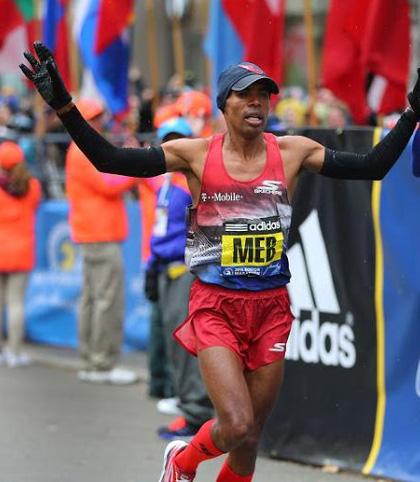
I had been curious about compression socks for three reasons. Like most other Marathon fans, I am well aware that Meb Keflezighi wears them in all his races. That is enough to get any distance runner’s attention. Second, when I was watching usatf.tv coverage of the Gate River (15K) Run a couple of months ago, I was struck by the commentators noting that a number of runners were sporting compression socks. Third, one of my Masters running compatriots had started wearing them recently, although in his case it was strictly due to a doctor’s prescription to prevent the development of blood clots in the lower leg and foot, a problem that had caused him some pain in the recent past. So this offer came at a good time for me.

First I will review what I learned on the web about compression socks before agreeing to give them a try and then a bit about my experience. For those who already know all they want to know about the scientific evaluation of compression socks, please jump down to ‘My Experience.’

What I Learned. Compression socks are long stockings (knee-high typically) that are designed to have tighter pressure at the ankle and lighter pressure as they rise up toward the knee. This graduated pressure characteristic is crucial. They are widely used by people who need to be on their feet a lot with their work and/or who have poor circulation in their lower limbs. They are specifically also used to prevent swelling and to prevent the development of blood clots. More recently they have become popular with distance runners, either as socks or as sleeves.

What about their worth to distance runners? That is debatable. Here are just a few of the articles that have appeared presenting or summarizing research on the benefits, if any, from distance runners wearing compression socks.:


My general view of the evidence is that there was little gain during training but some evidence of better recovery after training. A potential mechanism for increased performance would be enhanced flow of oxygen to the working muscles.  Studies have found decreased muscle soreness and general fatigue, especially after long or hard runs, but it is unclear whether this is real or a placebo effect. 

MY EXPERIENCE.

Immediate background/context. I am a 69 year old elite Masters runner. In the first 7 months of 2014, before succumbing to a hamstring injury, I ran a sub 40 minute 10K, a 1:29:29 Half Marathon, and a 1:46:27 25 K. The hamstring injury was a major trauma which I, unfortunately, aggravated in the final 150 yards of a 5K national championship cross country race in November. After that it was two steps forward and one step backward most of the time with an occasional two or three steps backward. I restrained the hamstring two weeks before running the Boston Marathon in a very slow time (an hour slower than my qualifying time). Luckily I did not aggravate the injury during the Marathon itself so a week later started running again and vowing to be fully compliant with Physical Therapy –type exercises at the Gym. That is the immediate context for my tryout of the Compression Socks—in rehab mode.

My first try was to wear them overnight after a workout; this was one of the ways some advocates suggested. It turned out to be very difficult for me to get the socks on, although I did eventually succeed, and then I had a hard time getting comfortable with them on. In fact, after tossing and turning for an hour or two in bed, I eventually woke up and removed them. So even though some recommend wearing them for 24 hours after a training run, that did not work well for me.

On Getting into Compression Socks. When I first tried getting them on I hadn’t done my research so it was really hard. Here are the tips I found later online to make it easier to get compression socks on. Try putting baby powder (foot powder) on the foot first so they slide more easily and there is also a method involving folding the socks in half by placing your hand in through the sock, grabbing the heel and pulling that up through so it just sticks out. Then stick your foot in the bottom half and then grab the ends and sliding up over your heel…and then finally up over your calves. Doing both the powder and the special fold job is probably better. I struggled mightily before encountering those tips; it was much easier after, but still not easy. I certainly cannot get them on (or off) as quickly as the guy in the video but maybe you’ll have better luck.

For a video exposition of the method explained above, please see:

My second try was to wear them during a run. Here’s a pic before I set out on the run. 


How’s that for color coordination with my spiffy new Boston Marathon shirt? :)

It was hard to observe any effects during this or one other workout I tried them in. The workout on this day, May 2nd, was hard but not super hard—4.5 miles with an easy first mile plus and then two quarter miles at 10K pace, interspersed by a quarter mile jog, with the 2nd quarter followed by a half mile jog and then run the last mile at 10K pace.. The only effect I may have noticed is that I seemed to warm up a bit quicker. I am pretty consistent now about starting off at a slow jog and gradually increasing pace if I feel like it, and then after the first three-quarters of a mile or so, stop and do stretching of various kinds. I felt that I ran that first bit faster with the socks on. I also ran the two quarter miles faster than anticipated, but that was more than offset by having to run the last mile at slower pace than anticipated and feeling the hurt a bit more than I had hoped. I am afraid I have to put myself in the group that finds little positive training effect of the socks during the run.

My final attempt with the socks was to put them on after the run and wear them for 2-3 hours. Over the next three weeks I had a number of hard workouts as my fitness was starting to return. By the end of the 2nd week of May I was running workouts like 6.5 miles in all, including 2 quarter miles followed by two half miles followed by two quarter miles, all with 2-3 minute active recovery between and for the first time in months the quarters were sub-90 seconds and the half miles were sub 3:15 and one sub 3:10—real progress. After the hard workout detailed above, I switched into the compression socks and wore them for a few hours. Over the next two weeks I had several hard workouts and I alternated wearing the socks afterwards and not wearing them. When I wore them, they did feel nice and snug, and I felt good about wearing them. At first I thought they might have been reducing soreness and improving the next day’s workout but after three trials both ways I could not really detect much difference in recovery.

My wife says to report that I do have good circulation in my legs though and that may mean they don’t benefit me very much where they might benefit others. It is also true that I am quite light, as befits a long distance runner—only 130 lbs. these days, on a 5’8”-5’9” frame. Maybe they are more useful for the typical recreational runner? So my lack of effect should not be taken as definitive for others.

One of the supposed benefits is in wearing the socks on long drives and in waiting around the day before a race. I will definitely give that a try next time I drive 3 hours or more to a race and/or have to wait around a motel room for a day or two before the race. When I do, I will update this review.

My bottom line right now is
·         Small negative (as far as comfort goes) if wearing them overnight
·         No observable positive effect when wearing them during a training run (unless a quick warm-up is important to you).
·         Small or no observable positive effect when wearing them after hard training runs. [I cannot rule out a small positive effect however as this has been a period during which my overall fitness was recovering at a good pace.]

I have no particular reason to recommend them at present but no reason to recommend against them either. There seems to be ample evidence that some runners find them to be beneficial.

SLS3. What about SLS3 in particular? I can say they were very pleasant and easy to deal with via e-mail. It was very easy to get the right size from them with just a couple of useful and easy to take measurements.

Offers. If you feel you want to try them yourself, SLS3 has offered a free give away. Please visit and enter the raffle at


They have also offered a 40% personalized discount to readers of this blog. Just visit their website at:


and provide them with the RP40 code.

Saturday, May 30, 2015

Preview of USATF Masters Half Marathon Championship in San Diego


May 30 2015.  USATF Masters Long Distance Running is staging their 2015 National Masters Half Marathon championships as part of the Rock n Roll Marathon of San Diego. On Sunday May 31st, Masters runners will gather from around the country to compete for national masters championships. Overall Masters winners will be crowned as well as age group champions.

Embedded image permalink
Meb Keflezighi [Keflezighi Twitter feed]
The headliners are undoubtedly two of the youngest Masters runners. Meb Keflezighi, who turned 40 on May 5th of this year and Jen Rhines who turned 40 last July, will be competing for the overall Masters win and will also, no doubt, be in contention in the Open Division as well. They are definitely the favorites to take the Overall Masters title on the men’s and women’s side respectively.
Rhines after winning the Half Marathon Title at Houston in 2011 in a time of 1:11:14 [Photo from: http://villanovarunning.blogspot.com/2011/01/jen-rhines-wins-usa-half-marathon.html]
There is probably only one runner on the men’s side who can reasonably compete with Meb and that is the famed Masters runner, Kevin Castille, who is the defending champion. Last year on a tough course in Melbourne Florida on an extremely humid day, Castille took the title in a time of 1: 07:55. With a favorable course and better weather, Castille should lower that mark in the race on Sunday. Another factor that makes some observers feel that there will be a real race is that both Keflezighi and Castille ran in the Beach to Beacon 10K last summer. At that race course on that day, Castille prevailed over San Diego’s favorite son by three seconds. Of course the 10K is arguably Castille’s best distance whereas the Half Marathon is closer to Keflezighi’s best distance, the Marathon. In fact Keflezighi ran a 1:02:18 last January to take 4th place in the USATF Half Marathon in Houston.And he followed it up with a 1:02:17 in the NYC Half marathon a few weeks later. If Keflezighi’s half marathon fitness is anywhere close to what it was earlier this year, he will run away with the Masters crown. But Castille’s presence guarantees it will be a real race.
Kevin Castille [photo from: http://www.runnersworld.com/elite-runners/kevin-castille-assaults-masters-marks?page=single]

And there is one other serious challenger. Clint Wells, who represented the USA three times at the World Cross Country Championships, and qualified for the Olympic Trials in 1996, 2000, and 2004. Wells won the Denver Marathon in 2006 and the Bolder Boulder 10K in 2008. Last October he finished 15th overall in the San Jose Half Marathon in 1:07:49. Wells could make it interesting if either of the two favorites falters.
Clint Wells leading the way up the slopes at Vail CO in the Teva Spring Runoff 10K in 2009 [photo:http://www.runnersworld.com/trails/purple-mountain-majesties?page=single]

On the women’s side, there appears to be no one to challenge Rhines for the Master’s crown. Initially there was a spark of excitement with the rumor that Deena Kastor might also be racing. But it turned out that Kastor is pacing, not racing. So Rhines will, most likely, be racing against the Open Elites on Sunday.

In addition to the race for the Overall Masters crowns, there are a number of exciting races to follow within the age groups.  Here is the rundown, age group by age group with the women first.

WOMEN

40-44. Rhines should easily take this group but others who will contend for the podium  include Maureen Wrenn and Sharon Lemberger. Wrenn was the third Masters runner in overall at the USA Cross Country Championships in Boulder CO in February, finishing within a half minute of the renowned runners, Colleen DeReuck and Melody Fairchild. Lemberger ran 1:23:18 in the Kaiser Permanente Half Marathon earlier this year and finished 2nd in the age group at the USATF Masters 8K Championships at Brea CA in 29:32. Wrenn's cross country toughness should stand her in good stead but there is some question about the distance as this may be her first race at the longer distance. Prediction: Rhines, Wrenn, Lemberger in that order.

45-49. There are three close contenders in the Women’s 45-49 group. Jaymee Marty ran a 1:23:03 to take the Women’s overall masters crown in the Kaiser Permanente Half Marathon in San Francisco earlier this year. 
Jaymee Marty [photo from: http://www.women-running-together.com/womenrunners.html]
At about the same time, across the country, the defending USATF F45 Half Marathon champion, Terri Rejimbal, was winning her age group at the Gasparilla Half Marathon in 1:24:30. And in March, Celestine Arambulo took the women’s master’s title at the San Diego Half Marathon in 1:23:41. Marty appears to have better credentials at the Marathon which may help her stay strong throughout the race. She ran a sub 2:46 in Chicago at the age of 43 and two years ago won her age group at the Eugene OR Marathon in 2:48:50. 

Terri Rejimbal claims the silver medal in the 2014 USATF 15K Masters Championships in Tulsa, OK [photo:Defining Moments (Oklahoma City, OK): David Prentice and Michael Mayberry]

Rejimbal also has some experience at the Marathon, taking first place in her age group at the Walt Disney World Marathon this past January but in a considerably slower time than Marty. It should be quite a battle. Prediction: Marty, Rejimbal, Arambulo.

50-54. 
Becky Burnett and Amy Rappaport appear to be closely matched in this group with Kathleen Cushing-Murray providing something of a wild card. Burnett ran 1:41:55 last August in the Park City UT Half Marathon. Meanwhile Rappaport ran a 1:42:48 in the San Diego Half Marathon in February of this year and a 1:41:17 in the Illinois Half marathon last April. Cushing-Murray has been a strong runner at distances from 5K to 10K but she apparently decided to celebrate moving up into a new age group by moving up in distance. The Half Marathon will be a real change from her recent efforts. She took third place in the W45 group at the USA Cross Country Championships (6K) but faltered a bit at the USATF 8K Masters Championship in Brea CA where she took 7th in the W45 group in 32:28.  Prediction: Rappaport, Burnett, and Cushing-Murray.

55-59. Nancy Hatfield could be viewed as a slight favorite over Meredith Mills. Given unknown differences between the courses they ran over, the race could go either way. Hatfield ran a 1:34:35 in the Big Cottonwoods Half marathon last while Mills ran a 1:36:50 in the Surf City USA Half Marathon in February and a 1:34:59 in the Oakland Half Marathon in March 2014. However it does appear that the Big Cottonwoods Half Marathon is a downhill overall and fast course. Hatfield has run other half marathons in the 1:40+ range so there are some doubts. But it could just be that Hatfield's fitness improved. We shall see. Tori Parks does not appear to be competitive with those top two but should take the third spot on the podium. Prediction: Mills, Hatfield, Parks

60-64. This age group is loaded with talent. Honor Fetherston is the favorite but there will be tough competition. In the mid-1990's Fetherston was the USATF Masters Runner of the Year, finished second overall in the Masters Indy life Circuit (Grand Prix) and established the American Masters Half Marathon Record in 1:13:54, After taking some time off from running for extended family related issues, she has recently begun competing again.
Honor Fetherston (middle) pictured with her (triplet) sisters, Shelly Sumner (L) and Sharon Vos(R)--All are champion runners [photo:http://blog.women-running-together.com/?cat=6]

She took 1st place in the W55 age group last year at the Humboldt Redwoods Half Marathon in 1:34:46 and finished 2nd behind the legendary Chris Kennedy in the W60 division at the USATF 8K Masters Championships at Brea CA in February in 35:29. But Fetherston will have two serious challengers. Marina Jones has run two marathons this year already and has taken home two age group firsts, in the OC Marathon in May with a time of 3:32:48 and in the Walt Disney World Marathon in January in 3:34:17. But she can also drop down in distance as she showed with a 1:38:02 in the Long Beach Half Marathon last October. Janet Cain has run more than 60 marathons and has won the USATF national championship in two different age groups at the Twin cities Marathon. Cain suffered a concussion, broken shoulder and bruised body form an altercation with dogs on a training run in 2013. She nonetheless showed her grit by bouncing back to take the W60 crown at the USATF Marathon Championships in the Twin Cities in October of that same year. Five months later she won her age group at the Napa Valley Marathon in a time that was 14 minutes faster, 3:43:49. Prediction: Fetherston, Jones, Cain.

65-69. JoAnne Rowland appears to be the class of the field in this age group. She ran a 1:47:06 in the Clarksburg Country Run (Half Marathon) in 2013 and ran just a bit slower in 2014 at 1:48:14. Sharon Chaix and Jane Williams should battle it out for the other two spots on the podium. Prediction: Rowland, Chaix, Williams.

70-74. Norma Thomas should enjoy a comfortable margin over Carol Turner at the finish line. In 2012, Thomas ran 1:56:44 in America's Finest City Half Marathon. Earlier this year, Thomas showed good form in winning her age group at the USATF 8K Masters Championship in a time of 43:29. 

Pat Herr (L), Norma Thomas (C) and Dorothy Strand (R) and their winning medals, all affiliated with A Snail's Pace Running Club at the 2015 USATF 8K Masters Championships in Brea CA on Feb 22 2015. [photo: Thuc Tran]


Turner has run three half marathons this year, all in the 2:20 - 2:25 range. Prediction: Thomas, Turner.

MEN

40-44. As for the overall race this should be a race between Keflezighi, Castille and Wells with the prediction for the overall race carrying through to this age group that these three gentlemen share. Prediction: Keflezighi, Castille, Wells.  

45-49. This should be a highly competitive group as well. Chris Knorzer appears to be the favorite with the fastest recent time, a 1:12:36 in the Humboldt Redwoods Half Marathon earlier this year. 
Chris Knorzer
Chris Knorzer's Twitter profile picture [https://twitter.com/knorzer]
But he has two sub 1:16 challengers in Rob Arsenault who clocked 1:14:32 a couple of years ago in the Surf City USA Half Marathon and Rob Decot who ran 1:15:45 in the Grandma’s Half Marathon last year. And Robert Verhees is not far off with a 1:17:02 in the La Jolla Half Marathon earlier this year. Arsenault is better known for the middle distances on the roads, from 5K to 10K and he has not run a half marathon since 2012. Prediction: Knorzer, Decot, Arsenault
[footnote--After going to press I learned that Knorzer has had to scratch from tomorrow's race.]

50-54. This group features a rematch between Spyros Barres and Ricardo Maldonado who battled for 1st and second in the age group competition at the USATF Marathon Championship last year in the Twin Cities. 

Spyros Barres sprints to the finish line, slamming the door on the M50 Championship at the USATF Masters 10K Championship in Dedham MA on April 26 2015 [photo by Krissy Kozloski--http://krissyk.smugmug.com]


In that contest, Barres edged Maldonado by a mere 13 seconds, 2:38:48 to 2:39:01. But Maldonado may still be in marathon recovery mode this year. He apparently not only ran the Boston Marathon in April but also the Eugene Marathon in Oregon 3 weeks later. One would think he might be a bit tired. But we shall see; he has certainly raced himself into marathon and half marathon fitness. Maldonado ran a 1:13:32 at the PF Chang R n R Half Marathon in March. And let us not forget David Olds who mostly runs shorter races. Nonetheless, in October of 2011 Olds ran 1:14:02 in the Rock N Roll L.A. Half Marathon. Olds also ran the Mammoth Lake Half Marathon in 2013 in 1:19:31 but that race is at high altitude so is probably not indicative of his fitness. 

Francis Burdett (L), David Olds (C), and Ricardo Maldonado (R) with their medals in the 50-54 age division at the 2015 USATF 8K Masters Championships in Brea CA on Feb 22 2015. [photo: Thuc Tran]


He could make things interesting for Barres and Maldonado. Prediction: Maldonado, Barres, Olds

55-59. The Men’s 55-59 group should also be a barn burner. Masters Runner of the Year in 2013, Brian Pilcher should lead the way. Earlier this year he ran a 1:14:50 at the Kaiser Permanente Half Marathon in San Francisco. 

Brian Pilcher, finishing 2nd in the M55 group and taking the overall age graded title for Masters Men at the USATF Masters 10K Championship in Dedham MA on April 26 2015 [photo by Scott Mason]


But Fred Zalokar should give Pilcher all he can handle; Zalokar ran a 1:14:54 at the PF Chang Rock N Roll Half Marathon in January and then a 1:15:13 on May 3rd in Vancouver, BC. And we cannot ignore Joe Sheeran who ran a 1:15:23 at the Cinco de Mayo Half Marathon a couple of years back and has been a real tiger on the cross country track and the roads over the last year. So Pilcher will need to be on his game to fend off these challengers. Prediction: Pilcher, Zalokar, Sheeran.

60-64. Through what appears to be something of a fluke, the age group that often has one of the greatest number of runners, has only one entrant, Stan Ideker. 
Stan Ideker's Athlinks Profile Picture [http://www.athlinks.com/athletes/162239905]

Two of the stronger runners in this age group who typically clock in the mid 1:20's or faster, Peter Mullins, the defending champion, and Gary Romesser, have been engaged in injury rehab over the past year. Ideker regularly runs half marathons and usually clocks in the 1:39 to 1:43 range. That will be enough for the crown unless there is a late entrant who is unknown.

65-69. This group is almost as empty as the one immediately above. Injuries have played a role here as Paul Carlin, the defending champion in 1:29:29, and Lloyd Hansen, the owner of the fastest half marathon among the 65-69 group last year, are both nursing injuries. That leaves it wide open for Hank Sullivan and Douglas Wood. Sullivan took the M65 crown at the San Diego Half Marathon in March 2014 in 1:33:18 and took the age group crown in the Sue Krenn 15K in 1:05:02. Wood appears to be focusing a bit more on triathlons and does not seem to be competitive with Sullivan's times when he hits the roads. Prediction: Sullivan, Wood

70-74. This age group has only one runner but that one is some runner! Jan Frisby has been tearing up the paths and the roads in 2015 after battling injuries for a few years. Despite those injuries, Frisby still managed to train consistently enough to take home 5K road championships in 2011 and 2012 and cross country championships in 2012 and 2013. Age Group Runner of the Year in the mid-1990's, Frisby has returned to the top of the group this year. So far he has run and won each of the three national championship Masters races that have been held this year, the 8K and 10K road championships as well as the 8k USA Cross Country Championship. And this past weekend at the Marin Memorial Day Race in California, Frisby broke the American Masters 10K record for the M70 group in 40:14.
Jan Frisby, chugging to a new M70 American Masters 10K Record at the Marin Memorial Day 10K race on May 21 2015.[photo posted to Facebook by Len Goldman from https://tamalparunners.shutterfly.com/pictures/1621#1658]

Frisby has not been training for the Half Marathon so a record is not likely on Sunday but Frisby will no doubt run a good race despite the lack of competition and the differently targeted training. Frisby is looking forward to the return of Doug Goodhue, the silver bullet from Michigan, who has been the dominant runner in his age group for the last few years. Goodhue suffered an injury at the end of last year and it has kept him from competing yet this year.

75-79. Richard Williams will run unopposed. He runs many half marathons, typically in the 2:08 to 2:20 range. So even if opposed he might well be the favorite in this group.

80-84. Richard Burch runs unopposed in this category. Although it appears this will be Burch's first half marathon of the year, he ran two in 2014, finishing in 2:37:53 in August and in 2:25:09 in September, both in Minnesota. Clearly Burch is a formidable runner who is typically the favorite when he runs, whether opposed or not.
=======================================================================

Age-Grading. Men and women are combined in the competition for the top ten age-grading awards in this race. It is always tough to handicap the age-grading contests One would expect that Jennifer Rhines, Meb Keflezighi and Kevin Castille should be up towards the top. . But it is never safe to bet against Brian Pilcher.  Other men with a shot include Ricardo Maldonado, Adam Weiner, Clint Wells, Tom Dever, and Spyros Barres. And even though he is not pointing toward the Half Marathon in his training, let's mention Jan Frisby as a possible contender. Other women who may contend include Marina Jones and Honor Fetherston.

It should be a great kickoff to what we hope will be an annual USATF event in San Diego for years to come.


Sunday, May 17, 2015

The 119th Boston Marathon-My First

May 17 2015. I survived and finished the 119th running of the Boston Marathon. It has been nearly a month and I have had time to reflect.

It is a big and awesome event--the logistics are challenging, the weather on the day, as it turned out was awful--windy, wet and cold. But the runners are amazing, from all over the world and all levels of fitness, some running for charity others for personal goals, a few for glory. I was running my first Boston Marathon at age 69. I qualified last June in my first marathon ever at a time of 3:18+. That should have meant I had a chance at an age group medal.

But I knew going into the race that was not possible. Last August I suffered an upper hamstring injury and in the ensuing months have re-strained it a number of times either in a race I was committed to, or in training for such a race. Two weeks before the race, when training had been going okay and I was finally able to run some consistent miles at sub 7:30 pace, I re-injured it. After going 'cold turkey' for 4 days, I restarted on the 5th day and found that I could now run 10 minute miles but any faster would risk re-injury.By the third day I was able to run around 9:30 a mile for a few miles...Should I still go to Boston or not?

As a trained economist I knew I should 'ignore sunk costs.' I should not race just because I had already registered, bought an airline ticket, and so on. I should be forward looking and compare the benefits with the costs. The costs, going forward would be substantial--the race could not be pleasant. I would be running slowly and with some pain. But the benefit side dominates. Would I ever have another chance at Boston? Perhaps, but at age 69 nothing can be taken for granted. So of course I decided to go for it!

I decided to stay outside of Boston in a little motel in the quiet town of Bedford where my father grew to manhood in the 1920's and 1930's. My dad was not a runner and was probably a little disappointed that neither my brother nor I had his talent at baseball. He was a pretty fair catcher, at least at the high school level. But he enjoyed my running,especially after I brought home a big trophy. A connection to his hometown can only help. Of course it means I have to drive to an end-of-the-line T stop (on the Red Line) at Alewife Station, take the T into the Common and then bus out to the start. Still it should be easy.
My Wheels for the Weekend-Pretty snazzy!

After flying in, I stopped in the Blue Hills on the way to my motel and enjoyed a relaxing hike around Houghton Pond.
A Quiet Weekday in April in the Blue Hills Reservation at Houghton's Pond - Very Refreshing!


On Saturday I jogged along the Battle Road in the Minuteman National Park--only 15 minutes from my motel--retracing the steps of the rude Colonials.
At the end of my jog, shooting over my shoulder to the parking lot-a beautiful spring day--too bad it didn't repeat on Patriot's Day!
But it was still a little complicated. I made it easier by deciding to just buy a 5-day T pass so I didn't have to worry about fiddling with the ticket machines on race day morning. On Sunday I did a dry run into Alewife Station, bought the 5-day pass and took the T into the Boston Common. Because it was again a beautiful day, I just walked from the Common to the Convention Center for packet pickup. In through security bag check and up the escalators to:
Looks like the right place!

T-shirt time after getting your number!

 Then out from the Convention Center and join the throngs on Boylston Street.
On Boylston Street on the 19th of April, looking toward the finish line where we hoped to be in about 24 hours!

Sunday evening I placed the T-pass in the pocket of the jeans I was putting in the gear check bag. Still, because I can get distracted and might forget something, I made a detailed list like the following:

-When leaving motel, lock door and deposit  wallet in shorts pocket, throw casual shorts in trunk of car. Put a little bit of cash [10's, 5's, and 1's] in jeans pocket and put jeans in gear check bag.

-After park car at T-station, remove T-pass from jeans pocket, put car keys in jeans pocket inside gear check bag. Have T-pass in your hand or in a pocket on clothes you are wearing!

-At Boston Common, place T-pass in jeans pocket and place anything else you don't need in the gear check bag.  Check the bag! Get on the bus!

I was planning to wear old shoes and socks, with my racing shoes (with a clean pair of racing socks stuffed inside) tied in a knot and looped around my neck or in my hands. I had an old hooded sweatshirt and sweatpants  (bought at Good Will shop a couple of days before) to wear over my racing gear. Because it was going to be cold and possibly rainy, I decided on a long-sleeved tech shirt and shorts to run in.

In the morning everything went smoothly. As I approached the T-stop exit in my car, however, I suddenly realized I did not have my wallet in my pocket and momentarily panicked--Understand that in my day-to-day world, I *always* am checking my jeans pocket for the presence of a wallet when I leave the house, get into or out of the car and so on. But then I realized with relief that my plan was to not have the wallet in my person but in the car.

So parked the car, the T-pass worked perfectly, I boarded a subway train within 5 minutes or so and was at the Boston Common shortly after 7. My wave was to board buses between 7 and 8. I checked the gear-check bag and boarded the bus wearing only the racing togs I would run in and items that I can throw away in the Athlete's Village (AV), namely old shoes, socks, hoodie and sweatpants.

It was a longer bus ride than I anticipated-we joked that they must be taking us to Hopkinton via New Hampshire. When we arrived, we piled off the bus to discover the clouds had just opened up and there was a steady rain coming down--Someone called out, "Not a good sign.'. But the rainstorm actually passed over pretty quickly. But when I got to Tent 3 in the AV, I found that the rain had driven loads of people under the tents. In fact it was wall-to-wall people. No entrance I found could be entered without being totally rude. This was a little problem as the drinks and food were underneath the tents. One of the volunteers was actually passing some food out to outsiders who could not get in but that was only a partial solution. Eventually I realized there was another whole field with two more large tents beyond the one I was in. Those were not as packed so I could spend some time underneath and inside the tent where it was warmer and protected. There were plenty of port-a-potties around the edge of the fields for those who planned ahead. Those who had less foresight relied on the kindnesses of others to let them cut in line when their wave needed to leave and they still hadn't made it to the front of the line. All in all the AV worked pretty well, considering the less than ideal conditions.

Eventually my wave was called and I joined the throngs moving out of the Village toward the starting line--all well organized and pretty easy. Eventually we were allowed to go into our corrals; I opted to move to a slower corral (because of my injury). I was next to a middle-aged guy who had run 4 or 5 of these who kept telling me and the other guys around me, in his proper Bostonian accent, to enjoy it--especially when we got to Wellesley College, famous for the rabid cheering they do ffor all of the runners--"Have fun with it! Don't be like me the first time I ran when I stayed out in the road, serious runner, head down, focused on a good time--Go over to the roadside, give 'em a kiss, whatever, just enjoy it! They're screamin' their heads off for you so just enjoy  it!"

I wasn't sure how that would really work if the run was as painful as I feared but stored it away just in case. Eventually the gun went off and we walked forward, then got to a slow jog, and then eventually into a run and I started to see many people leaving me behind and others passing me, but no problems in terms of bumping or jostling. Initially I was able to find something like an 8:30 pace, not what I would normally want, but certainly no slower than I anticipated. Every time I planted my right foot, I had a reminder of the injury in the form of dull, background pain. My job was to keep a pace going that would keep the pain in the background, not come to the forefront.

The crowd along the roadsides was incredible. Over the first few miles there were a few places where it was a little thin but over most of the race, even with the weather being uninviting, there were lots of spectators. Later when we got into Boston, especially at the big intersections, the crowds were deep--and always loud and encouraging! It helps--maybe especially on an off day and this was about as far off a day running as I ever hope to have.

To give you the boring details of the deterioration of my run, I can just quote the splits:
5K 25:48--so I was feeling like I would at least average under 9:00 per mile which should keep me under 4 hours overall-not what I was looking for but at that point would certainly take it. Little did I know how much fitness I had lost over the past two months. The 10K split-52:48 --so 27:00 for the second 5K still under 9 per mile but just. The 15K split-1:21:36 or 28:48 for the 3rd 5K, now over 9 minutes per mile pace. I hit the half way point in 1:58:35 so it was still possible I could break 4 hours for the run if I could start to accelerate a bit. But it went the other way--I did enjoy blowing a kiss or two to the cheering Wellesley fans and occasionally gave people a wave but the last ten miles was very tough. I never 'hit the wall' but just got steadily slower. I suppose a cynic could say I wasn't going fast enough to hit the wall and that's probably right, but I am also glad I didn't bump into it at my slow, but unsteady pace.

But there were many memories of encounters that helped me keep going. If I would start to feel a little dejected there was always a new runner to check out--It might be a middle-aged Japanese man with a flag attached to his headband, waving to the crowd as he ran. A young Japanese man and his friend were running with a video camera hooked up to a framework with a wheel on the bottom, taking video of the crowds as they ran through. At one point I caught up with one of the differently abled runners who was running on two 'springs' from the knees down. He was bouncing ahead but mostly from side to side, advancing maybe a foot or so for every 2 strides. That was inspiring for me; if I had felt like quitting it would be pretty hard to justify to that guy!

The weather, with the headwind occasionally blustering and more raindrops falling, did not help. But I would not have run much faster had the day been perfect. I could feel my stride shortening and knew I was just skimming along the road surface to conserve energy. I started to worry whenever there would be a raised brick crosswalk or if we had to run across trolley car tracks that I might trip and fall. I was not sure I would get up if it happened--But luckily it was just a worry--Nothing bad happened and I did eventually finish with lots of people around me in a time that I could never have imagined, over an hour slower than my 3:18 qualifier, in 4:20:53. But finish I did--and had the medal to prove it!

After the finish the volunteers were terrific. Got my medal, got some food, got some liquid--One lady volunteered to open a power bar for anyone whose fingers were not up to it-that worked for me! Later, after picking up my Gear Check bag and heading to the changing tent, there was a young man who smilingly volunteered to undo any knots that were difficult. Considering the cold and wet, it was very welcome. Once I got inside the changing tent, things were much warmer and I started to feel somewhat human again. A guy next to me said, "Glad to see you're okay-you were shaking like a leaf out there. And okay I was, indeed. Nothing to do after that but head over to the edge of the Common and down the Escalator into the T--catch the Red Line out to Alewife station--into the car and back to the Motel. Into the shower and then rest-Ahhhhhh!


It was all worth it!